
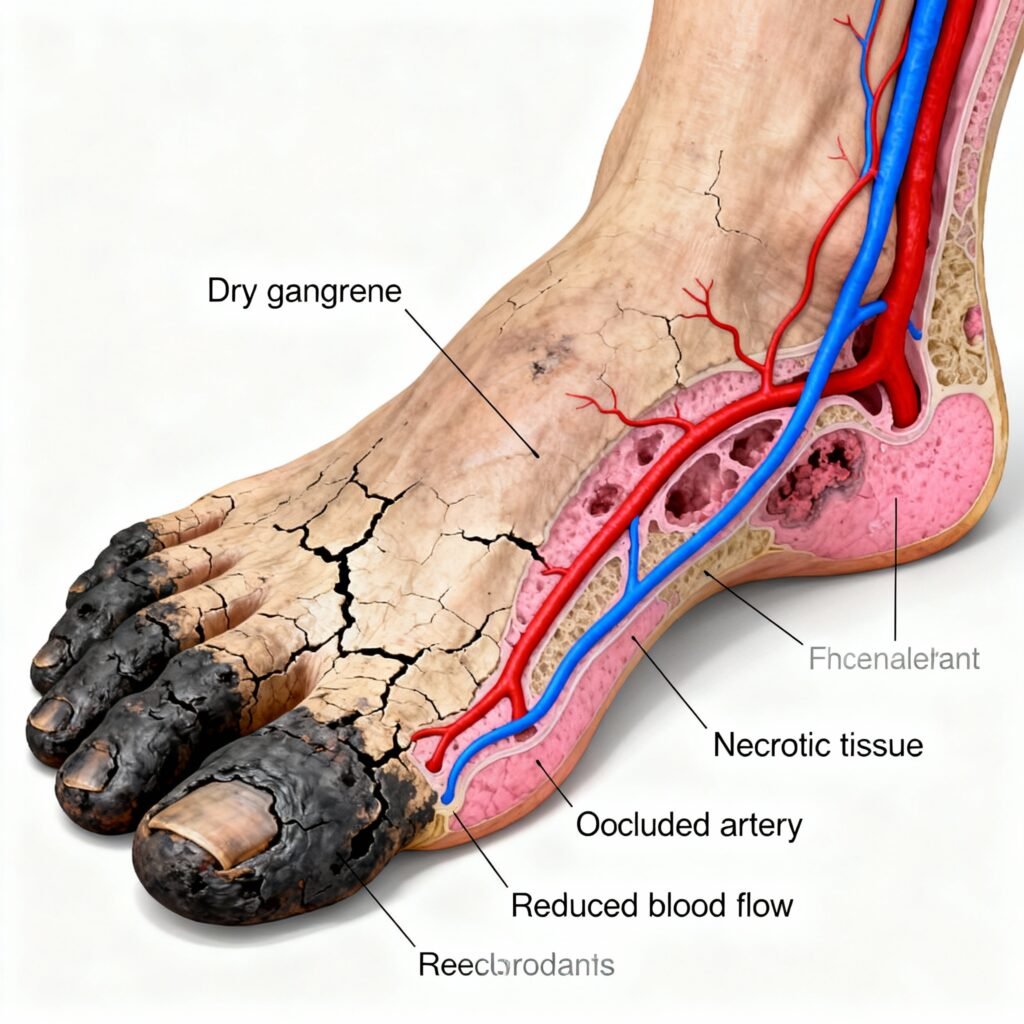
Dry gangrene is a serious condition that develops when there is a significant reduction or complete blockage of blood flow to a particular area of the body, resulting in tissue death. Unlike other forms of gangrene, dry gangrene is not accompanied by a bacterial infection initially. This condition is often seen in the extremities such as fingers, toes, and sometimes limbs. The affected tissue becomes dry, shriveled, and typically turns dark brown or black due to the absence of oxygen and nutrients.
The underlying cause of dry gangrene is usually related to poor circulation, commonly caused by chronic conditions like diabetes, atherosclerosis, or peripheral artery disease. Since the area is deprived of blood supply, the skin loses its normal characteristics and becomes tough and leathery. Over time, the dead tissue may naturally fall off, a process medically known as auto-amputation. One key feature of dry gangrene is that it progresses slowly compared to other types, giving doctors more time to intervene.
However, if not treated, dry gangrene can worsen and potentially turn into wet gangrene if infection sets in. Treatment focuses primarily on restoring blood flow to the affected areas wherever possible, which may involve medication, lifestyle changes, or surgical procedures such as bypass surgery or angioplasty. In severe cases where the tissue is irreversibly damaged, amputation might be necessary to prevent the spread of gangrene and protect the patient’s overall health. Preventing dry gangrene centers around managing risk factors, especially controlling diabetes, quitting smoking, and maintaining healthy blood circulation. Early symptoms like numbness, color changes, and coldness in the extremities should prompt immediate medical evaluation.